Saturday, July 3, 2010

No New Bus Stop at Hawthorne Square


Highland Ave North at Market Basket

For some time, I and the Commission have been trying to get the MBTA to establish a bus stop inside the parking lot at Market Basket.  

Last fall, we thought we were making progress.

A colleague of mine got a response from Keenan’s office, quoted here:

In a message dated 2/1/2010 10:22:55 A.M. Eastern Standard Time, Lynne Montague writes:

Hi Rich,

I wanted to get back to you with the latest information provided by the MBTA on the Highland Ave Bus Stop.  John Matthew at RMD , Hawthorne Square Mgmt has withdrawn its proposal to build a new bus shelter as the company stated it could no longer justify the expense.  The company further noted that the path for the bus, that the MBTA had agreed to, was objected to by the neighboring shopping plaza.

Mr. Matthew said he would contact the MBTA if he learned anything new or if the management company wanted to make a new proposal.  The city of Salem has instructed RMD, Hawthorne Square Mgmt that the bus stop must be cleared of snow.

I will let you know if there is any additional information on this proposal.

Best,

Lynne

Firstly, I’m uncertain as to what kind of expense is involved.  We never heard any kind of dollar figure;  was this to be an actual physical shelter?  I’d understood this would be just a bus stop in the vicinity of Market Basket.

Since I first drafted this post back in February, I've gotten some more information that puts a little light on this story.  The Commission got a copy of a letter to the Mayor's office from the MBTA, specifically from a senior planner/analyst:

The layout of this shopping center does not support a regular bus service. This facility is designed with a large parking lot, few walking paths, and multiple storefronts that would create conflicts between buses, autos, and pedestrians. With the present layout, there is no appropriate place for passengers to board, exit, or wait for the bus. We would be interested in discussing this situation with the management, owners, and/or tenants of Hawthorne Square to see if there are possibilities for making changes or additions inside the center which might create an appropriate bus waiting area area and safe path for the bus to drive through Hawthorne Square.

The Service Planning group is also concerned with the additional trip time a rerouting would impose on existing customers. We estimate that each customer trip would be lengthened by 4 minutes or mour if routed via the shopping center. Extending selected trips during weekday midday hours or on weekends could minimize the additional passenger-travel time, since there are fewer peak-period commuters who would be negatively affected by such an extension and delays from traffic are less severe.

Snow removal is a serious issue that affects the quality of a bus customer’s trip; ordinances vary by municipality. In general, snow removal on sidewalks or at bus stops is the responsibility of the abutting property owner.

The Route 107 corridor has never been quiet, except perhaps before I was born, but it is true that it has gotten more congested.  In fact, the T has had to run fewer buses with increased headways (80 minutes on weekdays) on the 450 and 456 routes due to heavy traffic on Highland Ave.

Ms. McCoy is also correct in asserting that the Hawthorne Square parking lot is not really laid out for pedestrians--there are no reserved pedestrian paths between stores.

This problem is much more than just one elderly person trying to get to the grocery store from the bus.

It's about how we have emphasized the personal car above everything and arranged our city planning around the car and its needs for parking at peak periods.

The only answer we seem to have is "more development".  While I (personally, not the Commission) cautiously favor the new Wal-Mart proposed on Highland Ave. (and disfavor Lowes), I'm not sure how this will help.

As it is, the Commission has de facto "adopted" Rt. 107, 1A, 114 and all the other entrance corridors in the city where pedestrians and people with disabilities travel. 

MassHighway has control over many of these corridors, so city councilors cannot do a lot.  Jean Pelletier and Jerry Ryan are the nominal councilors over Rt. 107's path;  I have not spoken to Jean but Jerry knows my thinking on this and we have spoken numerous times.

I recently had to contact MassHighway to fix one of the new audible signals (ironically near Market Basket).  After two months it's resolved, but someone needs to go out there to adjust its volume.

A call here, an email there, a tweak.  Until the next issue. 

Now, the talk of my state rep and my mayor is on casinos and pledges to improve 1A and 107, which will certainly serve the proposed resort at Suffolk Downs.

A tweak here, a tweak there.

People won't like this solution, but the community leaders in the region will have to push for the Blue Line to Lynn.  Just stand on the Lynnway near Wal-Mart or on Western Ave. past the bus depot and count how many buses with passengers go by.   It's more than you think.

With due respect to my colleague Rich, who never fails to give me a word against the city on this issue, it's a tough one.

And the Commission seems to be alone in fighting for this.

Wednesday, June 30, 2010

Salem Commission on Disabilities, Unofficial Minutes for June 2010

Elevator under construction at City Hall

City Hall elevator, under construction

Salem Commission on Disabilities Minutes for May 15th, 2010

The Salem Commission on Disabilities met at 4 PM on June 15th, 2010. Present were Jack Harris, chair, David Martel, David Tracht, Debra Lobsitz, Jean Harrison, David Moisan, Mike Sosnowski, City Council Liaison and Charlie Reardon, co-chair.

Jean Levesque is recovering from surgery. Andy LaPointe had a personal matter at home to attend to; Michael Taylor is having an accreditation review.

Old Business

Update on Jean.

Jack: He is set to go home soon, by Thursday the 17th. Michael says he’s doing very well. He’s being monitored, so he can’t go home yet. Jean expresses his gratitude at all the cards and well-wishes he has received. He hopes to be home soon.

Market Basket

Jack: I heard from John Matthews. I’m setting up a meeting with him, the mayor's office and the MBTA. Jennifer [his assistant] has offered to get the contacts for us; my contact at the T has moved on so I need to get a new contact. As soon as we get the meeting arranged, we can check off that one, we hope.

Salem Ferry wheelchair access

Jack: The Salem Ferry had a problem during the March storms. A section of pier, essential to wheelchair access, was damaged and needed to be replaced. Tom St. Pierre got in touch with me to let me know the part has gone out to bid to be fabricated. Service started on Memorial Day, and the part was to be replaced on the 15th.

Salem Ferry MBTA passes

Jack: The other part of this—I was at the BCS office in Lynn and had to go up the steps to the train station in Lynn. I fell on the steps--it was a very dark area and no yellow markings or stripes. Anyway, I spoke with a friend at the BCIL and he referred me a person at the T—Gary (can’t remember his last name)--and the T will do a site visit to see what needs to be done. I also got into some other discussions about the Ferry. We sent an email higher up to get T passes accepted on the Ferry. People may have seen a newspaper report about the lower fares this year.

Charlie: The wheelchair access repair? How is it going?

Jack: The MAAB was notified. It was hoped the wheelchair access ramp would be fixed by now but I understand it is a special part.

Jack: Please ride it if you can—it’s a great experience!

David Martel: The ferry's great.

Charlie: It is so smooth and comfortable.

Charlie: Andy and I were on the Ferry and were passing by Logan Airport. There was a very loud roar—a plane flew over us!

Jack: If the wind is just right and depending on the aircraft it is very loud.

Charlie: Andy's dog wanted to dig a hole through the bottom of the boat!

Jack: Some background—we (the city) own the Ferry (the boat) and a private operator runs it.

Jack: The city has been able to get Dominion to sell them the Blaney St. pier; the city is working on grant money to build a new pier for cruise ships there.

Charlie: There have been cruise operators there before.

Jack: But this project will create new opportunities for larger ships.

Jack: The city will need to open up its public transportation options. The Trolley does a good job. I was reading that a cruise ship in the new terminal could carry 600 tourists. That may be a bit much for the Trolley. We hope this opens up transportation options and the Commission will be there to support them.

Salem Common Playground

Jack: The playground is complete. It was a great dedication. Charlie was there.

Charlie: I was there, Jack and Donna (Harris) was there. We were there with Steve Dibble when he built it. We had a crew of over one hundred people for three days. The floor surface is deceiving, it's very soft. Kids fall down and literally bounce back up.

There are two regular swings and two swings for disabled children. It's a great project. A lot of people will enjoy it.

Jack: The group behind it is Parents United. I have to admit they did a great job. They are selling engraved bricks on a new walkway to donors if anyone is interested.

They are holding a dance fundraiser Friday.

They did a great job working with the city.

I also praise Steve Dibble for his efforts, and his sacrifices, to put this together.

But it’s done. We have been talking about this on the Commission for a long time.

Salem MBTA Station

Jack: There's been a little trouble implied by the press, where it was suggested the project was in turmoil. Governor Patrick says the project is still on track.

There was a newspaper article about Beverly’s depot project and the new scheme they will use to build it.

But again in my previous discussions about the Lynn station with my contact at the MBTA, if the Commission wants to look at any accessibility aspect of the Salem design, he will help us to review it.

I don't think it is so much the details that have been already proposed that are already on paper, but the details that have not been committed to, like the covered platform. The raised platform is supposed to be a done deal.

David Martel: Thy MBTA uses a common cost-saving cookie-cutter format for their designs. They used it to build a garage at the Museum of Science, but didn't look at the plans closely enough and had to cut concrete and rework several of the floors and it was very expensive. The cookie-cutter design is cost saving to them but if they make a mistake it costs.

Jack: I think most of what the city has asked for has been supplied. It is just issues like the covered platform. Because of where it is, it gets cold in the winter. I think we’re headed in the right direction. Whether this continues, we will wait and see.

Jack: The courthouse is exposed now. I have not heard a lot about it.

David Martel: We don't hear about it except from the newspapers.

Jack: They will try to get it all done at the same time. I don't think that will happen.

Charlie: They have underground parking, it looks like.

David Martel: Secured parking for prisoners, judges and such.

Jack: Sidelight on that, a new restaurant has been approved for the Jail. Open in August. There will be no parking on the green space--that has been settled. The space will be cleared as soon as the Bridge St. construction is complete.

Most of you are aware that Boston wants to raise its HP parking fines to increase revenue; that has been in the news lately. The mayor has been very vocal recently about parking.

MAAB Update

4 First St.

Jack: I spoke with Tom Watkins. The developers have been directed to make a curb cut by the MAAB. It should actually happen, within 45 days. I haven't gotten the ruling yet.

Parking Issues

David Martel: Woman got a ticket in Danvers for parking in an HP space. She claimed to be disabled but had no placard.

Jack: I guess she went there, twice, and the 2nd time around she parked in the HP space.

When she went into Superior Court to file suit, I guess the court waived the $250 filing fee but her husband couldn't represent him because he'd lost his law license. Point is, she got the ticket, she's got the right to fight it but probably she won't win.

Jean Harrison: Has there been discussion about the HP parking fines? The fines are too small in many communities.

Jack: There has been some discussion resurfacing about increasing our HP parking fines.

David Martel: Some communities like Saugus put the money back into enforcement.

Jack: Yes, Waltham. This funds an off-duty officer on behalf of the city's Commission to find violators. They found that that money comes back threefold what they pay the officer.

Jean Harrison: I have troubles regularly with people parking in the HP space that I need. Several times I have had to find an officer.

Jack: Any time you have problems like that, try to take down the license plate. The police are good about that.

The weird thing: If the woman in Danvers had parked in the fire lane it'd only be $20!

Jean Harrison: Exactly!

Jack: I’m revisiting certain parking lots in the city. One of the areas I have been revisiting is the 400 Highland Ave strip mall. There are spaces there for HP but they aren't appropriate. We actually sent a letter out to the owners and hadn’t heard back. Tom [St. Pierre] is going to follow up. Parking is an issue, is always an issue, will always be an issue, and won’t be resolved.

I want to reiterate quickly: As most know, if you have a HP plate or placard and use a metered space—no fee! If you park in the Almy's lot or the garage [both?], you need to pay. There are HP spots in those places but you need to pay.

A year ago, there was talk about putting a garage on 10 Federal to include HP parking. It didn't happen. There was an offer from Jim Hacker about putting a few HP spaces on the Church St. side of the lot. But there are no curb cuts in that area from the parking lot to the sidewalk; we were working on that but it hadn’t been resolved. There is a new crosswalk in the area—it’s just a matter of curb cut access to the lot itself.

David Moisan: Many people don't have pen and paper. But many do have cellphone cameras. You should use them. It would be a good idea to learn how to use your camera phone and how to send pictures in email to yourself, or transfer the files to your computer via Bluetooth. It’s good not just for parking violations but for curbs, broken sidewalks and etc. Just take pictures before the owner comes back so the owner won’t be tempted to confiscate or destroy your phone or camera.

Charlie: The police told us, never, ever, ever, get into a confrontation.

David Martel: Does the camera really help?

Jack: Oh, yes, the MAAB has gotten photos and taken action on a parking issue based on that.

Debra Lobsitz: I was at a meeting this morning on ways to get funding. The Watertown Commission on Disabilities gets funding from parking fines and puts the money back into communications and other projects to improve accessibility in the town of Watertown.

Jack: Absolutely true. As most know, when those fines are paid here [in Salem] it goes back to the general fund. But in Waltham and other towns, the city realizes there is revenue generated that can be used to improve access. We need to put a bigger bite into HP parking fines.

David Martel: Like Saugus as an example.

Jack: The hope, my hope, is that we can split the funding between the city, the Commission and an off-duty enforcement officer. At least that's what we want.

David Martel: My problem is with the temporary signs for street sweeping that aren’t taken down. People ignore them.

Charlie: They don't take the signs down when they're no longer in effect. They look at the signs three months later and ignore them!

Jack: Debra’s correct. Many commissions have done this and it is an option. Some communities have done that but the disability commissions have been isolated and many feel, unfairly, that the commissions are just collecting fines. But we have been very open and have great relationships with the rest of the city government.

Charlie: The city has been very responsive when we needed to put an HP sign up.

Jack: In fact, the Mayor's office has actually been suggesting these initiatives.

David Martel: We got a significant number of curb cuts installed in the city last year.

Jack: I've never seen as many wheelchairs and cane users as I have seen in the last few years.

New Business

Election of Co-Chairs

Jack: I have called for an election of two co-chairs. This is happening because my term is ending in January [2011] and I do not want to pick it up again. I’ve been here for 15 years. You will get a letter on this. It’s time.

I nominate David Tracht and Debra Lobsitz. You have the nomination sheets; I will print a ballot for next month.

You and all who have come before you have worked hard to bring the Commission to where it is today. On another note: I congratulate David Martel and David Moisan on their reappointments to the Commission.

David Martel: I really didn’t know what our group did until I joined it. This city is held to a higher standard--that came through very clearly during the access training last year.

Jack: The one thing I want to pass along and emphasize is our relationship with the city. Politics is a factor of course, as it is in everything, but if you can work around that you can get a lot done. I'm proud to have worked with various mayors, the licensing board, city inspectors and planners over the years.

David Martel: All of these commissioners now, when they do site visits, do these just for the point of catching mistakes people miss in design and planning, before they get stuck with the mistake afterwards.

Jack: We gave owners and stakeholders the opportunity to go to the AAB. Sometimes, they had a different take on the issue than we did and that is fine. I do the best I can--but people can see things differently. We want different perspectives.

David Martel: As a newly-disabled person, I’ve seen things a bit different. Entertainment is very important to us, as it is to able-bodied people.

Jack: I don’t want any of you to feel you aren’t a part of the Commission because you aren’t working actively on something at the moment. Your time will come. The mayor has recognized that each of you has skills that the city needs to make accessibility work and contribute to the success of the Commission.

Disability Policy Consortium

Jack: There will be a Disability Policy Consortium regional meeting. June 29th, 6 PM, Wilmington.

If people would like to go, let me have a sense. I gave a heads-up to Doug Bollen, if you want to go and there are enough of us we can get a right. I don't think MOD is going to do a regional meeting in the area anytime soon. It's a good time and place to network.

Another sidelight: In the Globe, this group submitted a lawsuit when the water emergency took place a month ago; there wasn't notice given to people with disabilities.

Let me know tomorrow--if there are enough people I will get Doug Bollen to get a van.

This would be a very interesting meeting for the Commission to go to.

4th of July Fireworks

Jack: Charlie and I have been talking about accessibility on the lawn at Derby Wharf. I mentioned it to the city a few years ago and also last year, but it was too late to get something done.

They're still trying to figure it out. But there will be an access aisle on Derby Wharf and an area on Derby St. for mobility-impaired folks.

What I told Ellen [Talkowsky]: Let's try this. It should be publicized on the city website. It's hard to judge exactly how much space we need. The other part of that: at the end of the night; I have two disabled daughters in wheelchairs. It's scary trying to get out of there at night with them. I've been in touch with the PD and asked them if there is a free officer, if they could assist people in getting out of there.

The other thing put in place: There'll be a portable toilet for wheelchairs. There are disabled restrooms on the park service space but we wanted another one.

Objective: We want to see how well this works. We don't want to use more space than we need nor make it inconvenient for non-disabled people. If people aren’t going to use the space, we don’t want to go to the effort.

Charlie: If they take a two-foot line from Derby St. to the lawn, the visitor’s center and fence on the left side and mark it off with chalk as for football lines, we can make a no-blanket no-sitting area.

Jack: That's not nailed down yet. There will be access to the field by whatever means, chalk, fencing, flags, etc.

Other Business

Thoughts on the Commission

David Moisan: I want to thank the Commission for three great years. I didn’t know it would be like this when I joined. Of course, I was associated with the Commission for years before [filming meetings]. When all you do is film things, and the neighborhood associations have asked me to film meetings, you get burned out when you can’t get involved. I had to join the Commission and it was the best thing I ever did.

I have the greatest respect for Jack and for his two daughters who are my virtual godchildren. I understand Jack and his need to step away from the job; it happens. I’ve thought hard about doing his job someday just as good as he has.

Jack: I’m not going away!

David Martel: It’s been great.

Jack: The most important thing, as David [Moisan] says, is all the people I have met and the people that many don't know, all the people in the disability community who I have met who have affected me personally. A gentleman in Topsfield worked for a box company for years. He is deaf--but no one knew it, he taught himself lip reading. It's an amazing story. Those are the kinds of stories, the kinds of individuals it is amazing to learn about. These are the stories we need to bring forward.

Charlie: Salem has gone forward in a lot of ways. It's inconceivable to be without the Commission.

Jack: 20th Anniversary of the ADA is coming up. It would be good if you could review the history, see what was supposed to happen--and what actually did! Not only for people with disabilities generally, but specifically in the City.

We have a long way to go.

David Martel: If people run into obstacles and roadblocks and we don’t bring attention to them, they don’t get noticed. Even the mayor notices this.

A-Frame Signs

Jack: The other thing that people should know: The A-Frame ordinances from last month were approved. Look at them and make sure they conform.

City Hall Elevator

Jack: Some people have not known this--it's quiet--the elevator at City Hall is very close to being completed. In a few weeks it will be up and running. They kept me very well updated.

David Martel: What about Morency Manor?

David Moisan: The new elevator appears to be in service, reopened very quietly. The variance work was not done. I understood it to be an extra relocated control panel on the first floor.

David Martel: Correct.

David Moisan: It was quietly turned on, I used it last week. They told us, they would open the elevator when some surface treatment, laminate or something was installed in the elevator. I’m not sure if that referred to the new panel.

They don’t tell me much of anything. I really wish they’d asked to do this when the construction crew was there—it would have already been rolled into the general construction and complete! The replacement for the old elevator is in design. When it gets torn out, I will ask the SHA if I can take pictures!

The meeting was adjourned at 5:21 PM

Friday, May 28, 2010

Starting a 4th year of blogging

Frisky on my mom's scooter

I have recently completed 3 years of blogging.  By tradition, I have a picture of my mom, Jeannette.  This year, I found pictures of her cat Frisky, her most recent and last pet.  She is minding Mom’s motorized scooter;  Scooters like hers are now commonplace but this was really something in her day that helped her independence.

Another Frisky picture:

Frisky and David M.

She’s with me, her “daddy”.  I could not leave the house without her at my ankles. (“DADDY GOES!  DO NOT WANT!”) When I did leave, she would tell Mom endlessly and at length in many words, “PAPA GONE!”  (And then, coming home, she would see me—and totally ignore me!  “NOT TALKING!  YOU WENT OUT”)  It’s been 16 years and I miss them both.

My past year’s blogging saw an old Salem blogging duo go away, and a new one emerge.  A dear friend of ours passed on. I saw a lot of rancor and strife, no small amount from myself.

We saw the design for a new Salem Depot go forward, and I also saw blogging burnout.  I’m still fighting that—if it were not for SATV and my work on the Commission I would be lost..

My apartment was rearranged when a new elevator was built in my building this past year.  It still isn’t open yet but hopefully soon…

Last year I missed the groundbreaking ceremony for the Salem Jail.  The ribboncutting was yesterday.  I missed that too.  But I did go to the open house!

To another year of blogging!

Wednesday, May 26, 2010

Salem Commission on Disabilities May 2010 Unofficial Minutes

Collage of Elliot, Andy's late guide dog

The May meeting has been dedicated to Elliot.  This is a collage created by Andy’s daughter.

Salem Commission on Disabilities Meeting Minutes for May 2010

May 18th, 2010

Meeting Introduction

The Salem Commission on Disabilities met on May 18th, 2010. Jean Levesque will not be present as he was scheduled for heart surgery this week. David Tracht is off.

Present: David Martel, Debra Lobsitz, Michael Taylor, Andrew J. LaPointe, Dave Knowlan, guest, Tom Boudreau, Verizon, and Jack Harris.

Guest Presenter

Mr. Tom Boudreau of Verizon:

Jack: It’s been a long time coming; Jean Levesque and I met with Tom, and Stan Usovicz, over the winter and felt he would be a very good resource for the community as far as what Verizon offers. I’ll let Tom speak.

Tom: Thank you all for inviting me here today. I can’t hear anything, so I brought an interpreter.

I work with the Customer Center for People with Disabilities. We serve people like the deaf with TDD/TTY phones. We serve people with hearing impairments with amplified phones. We try to use technology to help people. For example we help people with JAWS. Most people are concerned--is the service compatible with their line? We try to give the right authoritative answer.

[Verizon FIOS] has opened a lot of doors for people with disabilities.

Dave Martel: Not in Salem.

Tom: I live in Peabody. Not there either

Tom: It's a fantastic technology. Basically the phone is like a little tv or computer with a webcam. People with sign language can use it. If your kid calls you're going to want to see him to see that everything's fine. It looks easy, but what makes it work is very complicated.

It's internet based but you need a certain speed; too slow and the service becomes choppy.

So, what we need for that is download and upload speeds that are faster. Most people don't know their upload speeds; hey tell the customer their download speeds but almost never upload speeds.

FIOS offers an upload speed of 2 Mbps, and high-definition television.

What's interesting is that … you can reach out and communicate with anyone with your language.

We offer phones that the deaf can use to communicate with sign.

We do serve people who are hard of hearing. We have all kinds of technology for them. We have the Relay. How does that work?

The caller calls a third-party Relay service. The Relay operator will use the TTY to the deaf caller at 65 wpm--faster than the national standard of 45 wpm.

Now it is improved; the caller will talk to the relay operator who will transcribe text to the computer much faster at 150 wpm.

That's what I try to do. New things come up every day.

The important thing about my work about the center I work with is, what is the definition of disability: What I tell people is that when their [abilities] and the environment do not match, they have a disability..

It takes patience to work with customers, like blind customers who can't see the phones or things they're working on. I ask them to put their hands on the device. I don't claim to know everything. I get and give one to one training to deal with different customers and their different disabilities. If they can't hear, we can amplify our outgoing phones. We want them to be comfortable. We ask a lot of questions. How can you make the right decisions if you can't ask the right decisions?

People with motion disabilities, we have to make sure they have the right tools. I have many people come to me.

This is a center that is entirely devoted to people with disabilities. That's very important to point out.

Our products are great. But we are very proud of our customer service. It is only as good as we can make it and we are trying to make it the best. We want to make our customers very comfortable. Any questions about phone, TV, cable or Internet service, I would be very happy to answer.

We can't deal with things like TV commercials but we can deal with captions. The service in the 1990's was what was known as Line 21. Now, it is digital and Line 21 has disappeared. The law required that any device with video have CC built in. But many people found that after digital, the CC was turned off and they had to turn it on at the device.

The important thing to realize is that there's a place for people to call to find this information.

Jack: One of the questions I have is, do you have direct responsibilities for training your CS people about people with disabilities?

Tom: Yes I work on training ... And try to include that.

Jack: This is more of a business aspect than disabilities. Verizon seems to be a much more expensive product, in their landline services, than other products. Can people with disabilities get price breaks?

Tom: Two part answer: We do have discounts in some areas. Some blind qualify for free directory assistance. Verizon does offer a competitive price if you get several services together. We can get FIOS TV, internet, phone for $99.

Dave Martel: Not yet!

Tom: We are working on that. If there is competition, the prices will go down.

Jack: When you talk about competition, I think it is extremely important to continue or complete service to Salem not only for the residents but also for the people who live and work in Salem. The more leverage that can be brought to bear with VZ and FIOS will go a long way towards residents and tourists but also with VZ. Especially for the disability community.

Dave Moisan: FIOS access to multi-unit buildings? Especially public multi-unit buildings?

Tom: FIOS is still cheaper to the customer than other services with bundling. And DSL is limited by distance, FIOS is not.

Andy: $99? One year.

Tom: Two years. Every state [and franchise] has different terms and I don’t' try to memorize them all. Just call and see what deals they can offer you? All I can do is encourage you to make the phone call.

Andy: I had occasion to work with their [VZ] customer service and am very happy with it.

Tom: Thank you.

Andy: I can tell you I'm not happy with Comcast telephone.

Tom: I'm more concerned with their picture/TV service and the picture phones. The TV service looks much better, much more than some TV's can display. I've been very fortunate to go to a FIOS house and see all the things that can be done. Even refrigerators that can order food!

If you can save money and get the best quality service out there; people with disabilities will benefit. I'm very proud of my work. We have two centers in Marlborough [MA] and Oxnard [CA]. The baby boom generation has more people with mobility impairments and disabilities and we can make a strong business case.

I can tell you right now we are providing it.

Jack: What about videoconferencing? Hardware? Resources for people with disabilities? Costs? How?

Tom: Many, many Internet based providers. Most video phone companies will provide the phone free of charge but you must have internet service--it won't work otherwise. They make money on their relay service which defrays the cost of the phone.

Tom: 5 or 6 companies. Changes every day. Some are wireless and I am trying one right now--not that I'm trying to drive my car with it!

Andy: Sure you're not in Sales?

Tom: I'm not trying to push a product that's worse than the competition. I wouldn't push it if I weren't confident in it, because if you don't like it you won't be back.

Jack [and all]: Thank you for coming.

Old Business

Market Basket MBTA Bus Stop

Jack: I do have a small update: I talked to Mr. Matthews at MB and heard right back from a woman at the T. I’ll pass around two letters I got. MB and the City and the MBTA met. They did come to some agreement as to where the stop was going, who would pay for it, etc. MB sent back kind of a "threat?" to that deal. So, I said to the lady from the T that I would get back to Mr. Matthews and look at the bus stop issue again.

Options we have: The other half of the plaza is owned by a different company. If MB can't do it, perhaps these people can. Our ultimate goal has always been the safety of the passengers using MB and Shaws. I will keep people updated and am working with Jason Silva to get something done by the time the snow flies.

Salem Common Tot Lot

Jack: As some of you may have been aware, through the city's website and a piece in the paper, the Salem Common Tot Lot is being built this weekend, Thurs.-Saturday 7 AM through dusk.

The Salem Gazette article claims Steve Dibble is involved in the project but no confirmation. Hopefully this will be a successful project.

As some of you may know there was another tot lot project that happened over on High Street. Check that out.

Tavern in the Square

Jack: There’s been a new development in the Tavern in the Square situation. As you know, the sidewalk is blocked when the outdoor seating is opened.

David Martel: According to yesterday’s Salem News, The TITS in Central Square Cambridge does NOT block the sidewalk. Beverages can be carried to and from the restaurant across the open sidewalk.

Jack: That would help much. Beth Rennard is looking into this. Also, the News article had a complete list of sidewalk dining areas. Very helpful!

Dave Martel: Lots of people in Salem love and use outdoor seating.

Jack: No one wants to take away from outdoor seating but public access to public areas is still very daunting. TITS presents one important issue but not the most important one.

Jack: Some business owners were saying: It was only a "little" inconvenience for people with disabilities. I disagreed. Strongly. I got up and let them know that in no uncertain terms. The more [stuff] thrown out on the sidewalks, the harder it is for everyone to traverse.

People got the message We may be stuck with [the arrangement] of TITS because of certain political decisions, but we will continue to try to develop a clear path of travel.

David Martel: People are wondering just why the situation is different in Cambridge. There was more of a enclosed seating area, though I could be wrong.

Jack: This is, too, there’s not a lot of difference between the two. The other thing to be aware of, I let them know the other issue that they and the city need to be aware of is, there needs to be a 36-inch clearance in the seating area itself [for diners with disabilities]. Someone can file a complaint. Enforcement is going to be a big issue. Of course, I was reassured, “oh yes, we will manage that etc.”

Jack: I want to make all of you aware that you may hear of violations, not only from residents but also visitors.

Dave Martel: Adriatic took over the Edgewater; I got many complaints when the Edgewater was in operation; they would move barriers when Tom St. Pierre called, but then they’d move them back.

Andy: Laws different in Cambridge vs .Salem?

David Martel: Supposedly it was the state board making the rules.

MAAB Updates

Vinnin Square

Jack: I called Mark Dempsey, who does the survey, to schedule a site visit to Vinnin Sq. that had an access problem some time ago and 4 First St. and he will come in a few weeks.

The Vinnin Sq. property has been a problem for some time; they promised to fix the problem but nothing has been done as of this spring. We concurred that we should file a complaint and Mark Dempsey will be paying a visit.

Salem Housing Authority

Jack: Dave Martel & David Tracht made the site visit [at 45 St. Peter], made recommendations to the MAAB. The variance was approved.

Jack: Is the new elevator up and running?

David Moisan: Not yet. I understood the variance involved a new control panel on the 1st floor?

Jack: Correct.

David Moisan: I know when the new elevator is operating, the old elevator is going to be replaced. The old elevator replacement is in the design stage. I don’t know any more than any other tenant.

Andy: Dave, how many floors?

David Moisan: 5.

Jack: That’s why the second elevator was needed. The old elevator was breaking down constantly. \

76 Lafayette Street (The Howling Wolf)

Jack: This is going to be a taco restaurant, down the street from SATV [in the West Coast Video building]. I wrote the MAAB. The variance--ramp, restrooms and signage—is completely approved.

Berba Dental

[Wilson St. @ Highland]

Railings on HP ramp are not in compliance. When Jean comes back I can check the slope with our scale. They are getting an architect and the MAAB is giving them til August.

Dave Martel: Plenty of spaces near the ramp--but none of them marked.

Charlie R.: Mount the signs high enough over snowbanks, and paint them blue.

City Hall Elevator

Jack: An update on the City Hall elevator. It’s under construction. The power is installed, and the elevator cab is on its way. Hopefully by July it will be in service. Natalie Dill has been giving us regular and very informative updates. Excellent job!

New Business

A-frame signs

Charlie: A matter on the A-Frame signs. We gave our version of how dangerous the signs can be to people with canes; they can get their canes stuck on it and break it. There's no consistency on A-frames. There is a regulation for allowed square footage of signage per running foot of building. That should include A-Frame signs. I'm talking with Mike Sosnowski.

Marie's Sweet Something has a sign that is very well designed, with a colonial style that does not obstruct the building. It's very attractive.

Marie was there at the meeting and appreciated my comments.

Dave Martel: Businesses on Front St. at her location have followed the same convention so that Front St. looks very consistent and unified.

Charlie: As long as they don't interfere with the path of travel.

Also mentioned: Cobblestones on Essex Street Mall are HORRENDOUS! I've seen children in carriages being pushed down the street--there can't be a worse torture for them!

Andy: The thing is they're looking for a path of travel to be at least 5 feet (wide). They will bring the Commission in for any variance. 95% of the meeting was based on the MAAB and concerns of people with disabilities

It was a good meeting. I have a copy of the committee report which I will email everyone. . I did tell the committee that it is very important they use us [the commission] a lot more as it is much easier to deal with issues before they actually come out there.

We can even go to the businesses to talk with them individually.

Charlie: One thing I brought up at the meeting: When the new high school was built we went to many meetings--but this was well before anything was built! We had a lot of changes, but they were minor and didn't cost much. Everything we do is for the benefit of the City of Salem and the citizens of Salem and the visitors to Salem. This is all volunteer work!

David Martel: If people utilize us more, people see us more involved and that is good.

Andy: [About service dogs] Not all dogs are the same. Consistency is really a must. I brought up using a cane--as I have to now use one--I have memories of using canes and it tells me that people often step on the cane and break it, especially if you have [just] a 36 inch path of travel. They don't pay attention to the cane, where they would pay attention to the dog.

Especially Heritage week, Haunted Happenings, etc. Salem is a big attractor to many people with disabilities. So I think this is going to work out good.

Elliot

Andy: Back in February, my daughter made a collage for her class project on Elliot. She asked me for help and my wife Cheryl helped put together the pictures. The project got an A.

Disabilities Policy Consortium

Jack: Debra L. and I have been working on this. We would like to host a future meeting of the Disabilities Policy Consortium. I don’t know as much as I should; I know something about it, but not enough.

Debra L.: I have a contact with the DPC; I contacted her about the possibility of using some venues Salem to host an event. She told me the next meeting of the DPC will be in Wilmington—June 29th, 6 PM—and invitations will go out soon.

Jack: If you can get the information and invitations, we might be able to get the Council on Aging to transport commissioners to this meeting. It would be very worthwhile to go and a great networking experience. There’s not a lot of consolidation of disability-related resources. I am told Jeff Dugan of MOD will be there. Hopefully this will be productive.

Adjournment

The meeting adjourned at 5:40 PM. Next meeting, June 15th, 2010

Monday, May 17, 2010

Tavern in the Square has an open sidewalk—In Cambridge!

Downtown Seating Tavern in the Square 2010-05-05 010

Very interesting development in the Tavern in the Square situation:  Apparently, the Tavern’s Cambridge location at Central Square also has a sidewalk running through it—but it’s not closed off, unlike in Salem!

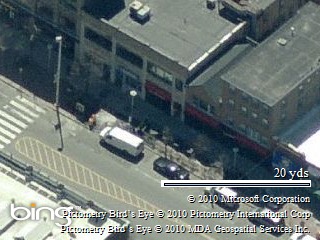
Here it is in Bird’s-eye View:

Map picture

The outdoor seating can just be seen behind the white van in the center of the frame.  I have been to Central Square a number of times before the restaurant was there and I can say it would be virtually impossible to close off that section of street for the restaurant as there is much, much pedestrian traffic passing that point.

The seating seems to most resemble that of Rockafella’s, which makes me wonder all the more how this restriction in Salem came about.

Without speaking for the Commission, I can still say that this is a very interesting development that we will be pursuing for sure.

Friday, May 14, 2010

Remembering Elliot

Andy and Elliot

[Courtesy photo from the Salem News used without permission.]

Last week, my colleague and friend on the Salem Commission on Disability had sad news:  His longtime guide dog, Elliot, passed away.

We have plenty of stories on the Commission about Elliot.  He was Andy’s second guide dog, following the retirement of Yates, both dogs having been fostered and trained by Fidelco Guide Dog Foundation.

One of the hardest things to remember when meeting any service animal—and I have met many over the years—is that the animal is “on the clock”.  It’s working for its owner, doing its job.  You can’t pet the animal or talk to the animal or interact with it as you would a pet.

As a pet lover in general, this is hard for me to remember.

Elliot made it even harder.

Elliot, like many dogs, loved most humans and wanted very much to meet new friends.  Whenever I got into a car with Andy to go somewhere, Elliot would jump in the back seat, but not before giving his fellow passengers a kiss and a lick with his tongue as if to say, “Hi!  You can be my buddy?!”

During Commission meetings, Andy would often pick the seat next to mine, near the center of the table.

Elliot would turn to me, lick my hand and look at me for acknowledgment.  It was hard to ignore him, yet I had to gently nudge him to curl up next to Andy for the remainder of the meeting.

Which he did.  Fidelco is not only good at socializing its foster dogs, but also training them. 

Elliot was a great dog.

He will be missed, and not only by Andy.

The 2010 Fidelco Walk next week is dedicated to Elliot.

My colleague, Jean Harrison, had this  memory of Elliot:

I really thought of Elliot as an under the table commissioner.  He was a dear, sweet dog.  I occasionally had the good fortune to have him rest his head against my leg or on my foot.  Which was very nice & made me feel welcome as the most junior commissioner.

Very sweet.  Thanks, Jean, for letting me repost this.

Thursday, May 13, 2010

Tavern in the Square sidewalk controversy

Tavern in the Square outdoor seating

Update on last summer’s controversy over Tavern in the Square.  The tavern’s outdoor seating has been completed and is now open for diners.

But as mentioned in the Salem News, it’s not necessarily open for pedestrians.  Due to state liquor laws, the sidewalk is closed to public access while the outdoor seating is in use.

The Commission on Disabilities has been very concerned about the blocked sidewalk for some time.  Our co-chairs spoke out last week.

SRA chairman Brennan says, of the detour:

"You might take 20 extra steps before you get beyond it," said Salem Redevelopment Authority Chairman Mike Brennan. "It's not a major impediment. I don't see this as a major problem. We're not asking you to walk a quarter of a mile."

Mr. Brennan, I have colleagues who have to count every step they have to take.  20 extra steps is not a problem for me but it is a problem for many cane users and those whose knees have given out.

But I can speak as a visually impaired person and I believe there is a problem.

Several years ago I nearly lost my sight:  My right eye’s retina tore, followed several months later by my left eye’s retina.  It was nearly two years and five operations before my sight was stable again.

During my recovery I had to perform many daily tasks with 20/100 vision or worse.  Tasks which included taking walks on sidewalks downtown and boarding buses.  You might think I should have just stayed home, but I and many others don’t have servants or even many family members to help.  There are many people walking their way through Salem with bad eyes;  I would not be the first nor the last.

To this day I have little usable vision in my left eye (20/200). 

To illustrate the problems around the Tavern in the Square area I took some photos, at noon and at dusk.  I’ve blurred them to approximate what and how I see out of my “bad” eye.

First, here is Tavern in the Square, from Washington St. walking south:

Tavern in the Square, Washington St. noon south

Here is the same view, through my bad eye:

Downtown Seating Tavern in the Square 2010-05-05 day south blurred

Now, Tavern in the Square from New Derby St.:

Downtown Seating Tavern in the Square 2010-05-05 019 day north And blurred:

Downtown Seating Tavern in the Square 2010-05-05 019 day north blurred These pictures were snapped around high noon that day.  I came back at dusk a few days later.  When your eyesight deteriorates, perhaps later in life, you may first notice it at dusk, a very challenging time to see, even for those with normal sight.

Tavern in the Square at dusk, Washington St.:

Outdoor Seating Tavern in the Square Dusk 2010-05-06 004 dusk south

Blurred:

Outdoor Seating Tavern in the Square Dusk 2010-05-06 004 dusk south blurred

From New Derby St. at dusk:

Outdoor Seating Tavern in the Square Dusk 2010-05-06 016 north 2

And blurred:

Outdoor Seating Tavern in the Square Dusk 2010-05-06 016 north 2 blurred

The sign directing diners was blown down—it was gusty that day.

When your sight is bad enough  that you can only see lights and darks and vague shapes, it’s a very different experience than most are used to.  Many can imagine being sightless—just by closing their eyes—but few realize the problems faced by the visually impaired.

Much was made, during last week’s meeting and the comments in the News, about accommodating “just 4 blind people” who walk through the intersection.  I have no idea if that count is accurate, having been thrown out by a reader on the News page.  But I do know there are many more visually impaired out there.  Probably someone you know.

Here’s one last set of photos:

Outdoor Seating Tavern in the Square Dusk 2010-05-06 017 new derby curb

This is, for lack of a better term, a curb structure put in during Tavern in the Square’s development.  I don’t know what purpose it was originally for.  The Commission has been told this was “a mistake”.  Here it is blurred, and at dusk:

Outdoor Seating Tavern in the Square Dusk 2010-05-06 017 new derby curb blurred

This is the quintessential problem I face as a visually impaired person.  Even though my sight is a good deal better than this, I have a very hard time seeing slight contrasts as represented by this sidewalk structure.

(This was blocked by sawhorses after this picture was taken.)

I occasionally attend seminars in IT as part of my field, and there is a hotel in the theatre district in Boston that I will never go to again because they insist on having steps into and out of the lobby that are black and completely unmarked.  I hate falling.  I have many other examples, of which this is only one.  (Another reason I hate cobblestones.)

I have no position on Prevey’s proposed fees on sidewalk access, and I don’t think the Commission will have a position either (at least until we next meet, if even then.)

I have no animus whatsoever towards Tavern in the Square, either, and I understand the other factors involved.

But I think there is a problem here, and I suspect the Commission will see it that way at next week’s meeting.

The resolution may involve orange barriers (at least, yellow or orange ropes, not necessarily construction barriers.)  Or it may involve redesigning the New Derby intersection, which has been on our wish-list.

But the one thing this is not about, Mr. Brennan, is “20 extra steps”.

Update:  EyesOnStreets has commented on my post..  I don’t agree with everything said there (I’m not a fan of Kunstler and, I can see the back side of the new courthouse from my house and don’t think it’s ugly) but I appreciate the kind words nonetheless.